Indicators on Causey Orthodontics You Need To Know
Table of ContentsSome Known Details About Causey Orthodontics 6 Simple Techniques For Causey OrthodonticsGet This Report about Causey OrthodonticsSome Known Questions About Causey Orthodontics.The smart Trick of Causey Orthodontics That Nobody is Discussing
Overlooking occlusal partnerships, it was typical to eliminate teeth for a range of dental concerns, such as malalignment or overcrowding. The principle of an intact dentition was not extensively appreciated in those days, making bite relationships seem irrelevant. In the late 1800s, the principle of occlusion was vital for creating reliable prosthetic replacement teeth.As these principles of prosthetic occlusion advanced, it came to be an important tool for dentistry. It was in 1890 that the work and influence of Dr. Edwards H. Angle started to be really felt, with his payment to contemporary orthodontics especially noteworthy. Initially focused on prosthodontics, he instructed in Pennsylvania and Minnesota before routing his interest in the direction of dental occlusion and the treatments required to keep it as a normal problem, thus becoming called the "dad of contemporary orthodontics".
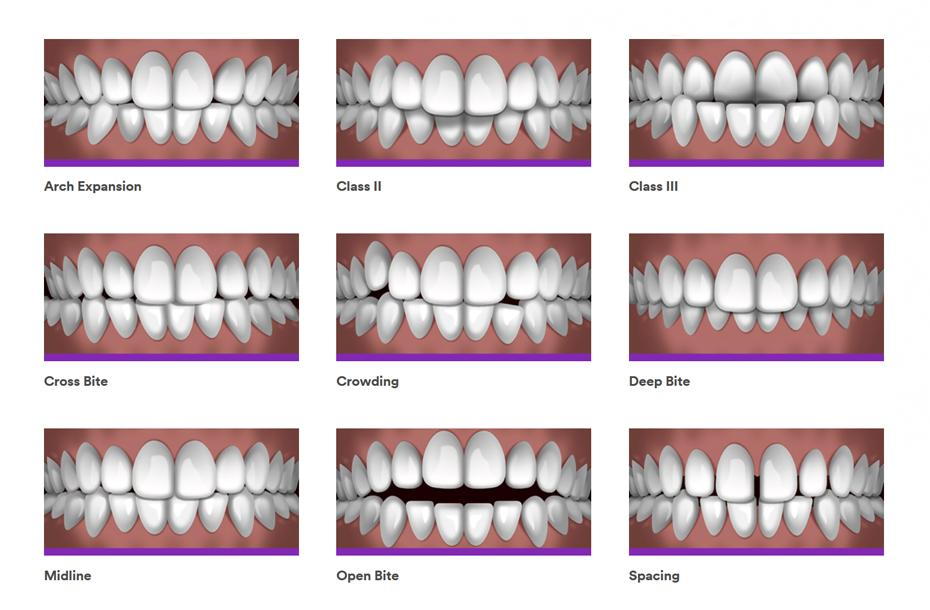
The concept of excellent occlusion, as proposed by Angle and integrated into a classification system, allowed a shift in the direction of dealing with malocclusion, which is any type of deviation from normal occlusion. Having a complete set of teeth on both arches was very demanded in orthodontic therapy as a result of the demand for specific partnerships between them.
Our Causey Orthodontics PDFs
As occlusion ended up being the essential concern, face percentages and aesthetic appeals were neglected - affordable orthodontist near me. To attain perfect occlusals without making use of outside forces, Angle proposed that having perfect occlusion was the most effective method to gain optimal facial aesthetics. With the passing away of time, it became quite obvious that also an extraordinary occlusion was not appropriate when thought about from a visual viewpoint
Charles Tweed in America and Raymond Begg in Australia (that both researched under Angle) re-introduced dental care extraction right into orthodontics throughout the 1940s and 1950s so they might boost face esthetics while likewise guaranteeing much better stability worrying occlusal partnerships. In the postwar duration, cephalometric radiography started to be utilized by orthodontists for gauging adjustments in tooth and jaw placement brought on by growth and treatment. It came to be evident that orthodontic therapy might change mandibular advancement, causing the formation of useful jaw orthopedics in Europe and extraoral pressure procedures in the United States. Nowadays, both functional devices and extraoral devices are applied around the world with the aim of modifying growth patterns and kinds. Seeking real, or at least enhanced, jaw connections had actually become the main objective of therapy by the mid-20th century.
Causey Orthodontics for Beginners
 Till the mid-1970s, braces were made by covering metal around each tooth. https://www.spreaker.com/podcast/causey-orthodontics--6251264., it came to be possible to rather bond steel brackets to the teeth.
Andrews gave an informative definition of the suitable occlusion in long-term teeth. This has actually had significant results on orthodontic treatments that are carried out consistently, and these are: 1. Appropriate interarchal relationships 2. Right crown angulation (idea) 3. Correct crown inclination (torque) 4. No turnings 5. Tight contact points 6. Flat Contour of Spee (0.02.5 mm), and based upon these principles, he found a therapy system called the straight-wire device system, or the pre-adjusted edgewise system.
The advantage of the layout depends on its bracket and archwire mix, which calls for only minimal wire bending from the orthodontist or medical professional (best orthodontist). It's aptly named hereafter attribute: the angle of the port and density of the bracket base ultimately figure out where each tooth is located with little requirement for added manipulation
About Causey Orthodontics
Both of these systems used the same braces for each tooth and required the flexing of an archwire in 3 aircrafts for finding teeth in their wanted placements, with these bends determining utmost positionings. When it comes to orthodontic home appliances, they are divided into two kinds: removable and repaired. Removable devices can be taken on and off by the person as required.
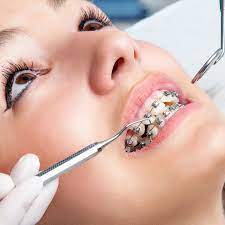
Therefore, mostly all modern-day fixed devices can be taken into consideration variations on this edgewise home appliance system. Early 20th-century orthodontist Edward Angle made a significant contribution to the world of dental care. He developed 4 unique device systems that have been made use of as the basis for many orthodontic therapies today, preventing a few exemptions.
How Causey Orthodontics can Save You Time, Stress, and Money.
The cable finished in a string, and to relocate forward, an adjustable nut was made use of, which enabled an increase in circumference. By ligation, each individual tooth was affixed to this extensive archwire (orthodontist services). Because of its minimal variety of activity, Angle was incapable to attain exact tooth placing with an E-arch
These tubes held a soldered pin, which might be repositioned at each consultation in order to relocate them in position. Called the "bone-growing device", this contraption was thought to motivate much healthier bone growth due to its capacity for moving force straight to the origins. Nonetheless, executing it confirmed frustrating in truth.